
 PDF Download
 PubReader
 Export Citation
 Email the Author
 Share Facebook
 Share Twitter
 Cited by 0 Article
 Metrics (View:80)






1. Introduction
Language barriers in education continue to generate unequal opportunities for learning across multilingual societies. Official policies that prescribe a single mother tongue or a narrowly defined language of the immediate environment often rest on assumptions of relative linguistic homogeneity. When those assumptions do not match the reality of urban classrooms, a persistent implementation gap opens between policy aspiration and everyday practice. Teachers and pupils are left to manage the consequences, frequently through informal strategies that remain unrecognised and unsupported.
Benin City is the capital of Edo State in Nigeria. It is a lively multilingual city. Children in its classrooms have their home languages as Edo, Nigerian Pidgin, English, Esan, Igbo, Yoruba, and many others, all seated in the same space. Many existing studies (e.g., Adesina and Jegede 2020; Ajibade and Alu 2026; Ezeh, Umeh, and Anyanwu 2022; Jegede 2024; Mohammed, Shangeetha, and Hamzah 2025) examine multilingual classrooms in communities where one indigenous language dominates.
At the primary levels of education, research has consistently demonstrated the functional utility and cognitive benefits of code-switching between English and indigenous languages. Adesina and Jegede (2020) in an investigation of Yoruba-dominant primary schools in Osun and Oyo States, Nigeria, report that nearly all surveyed teachers actively utilize English–Yoruba code-switching. These teachers identify it as an essential instructional tool to facilitate teaching and learning. Extending this to secondary education in rural communities in Enugu State, where Igbo is the dominant language, Ezeh, Umeh, and Anyanwu (2022) demonstrate that English–Igbo code-switching yields positive cognitive and learning outcomes. They find that it enhances conceptual understanding, aids classroom management, and fosters affective growth among junior and senior secondary students. Again, Jegede (2024) examines Yoruba-dominant classrooms in Oyo State, arguing for the formal recognition of indigenous languages as legitimate instructional media of instruction in schools. Jegede (2024) posits that English–Yoruba code-switching promotes metalinguistic awareness and boosts literacy in both English and indigenous languages, thereby aiding overall lesson comprehension.
In spite of these benefits to teaching and learning, there is empirical consensus across various educational levels that cautions against an over-reliance on the practice. Ajibade and Alu (2026) confirm that while English–Yoruba code-switching enhances instructional quality in Ogun State public secondary schools, over-reliance ultimately jeopardizes students’ long-term English language acquisition. Jegede (2024) echoes this warning too. It notes that excessive classroom code-switching can impede proficiency in the English language. This tension becomes particularly pronounced at higher educational levels where Mohammed, Shangeetha, and Hamzah (2025) observe that while code-switching between English and Hausa, Gwari, or Nupe supports general learning among tertiary students in Hausa-dominant Niger State, it simultaneously leads to the erosion of essential academic reading and writing skills.
In sum, these studies suggest that while code-switching serves as an invaluable asset for learning across primary, secondary, and tertiary contexts in Nigeria, its implementation requires careful management to prevent the degradation of English-language proficiency.
The NPE1 (NERDC 2014) and the NLP (NERDC 2022) both mandate mother-tongue instruction throughout primary school to build stronger literacy and support cultural identity. There is a gap between everyday teaching and the official policy. While this gap has not been well studied in Nigeria, it is particularly pronounced regarding educational practices in urban, highly heterogeneous places like Benin City.
In such places, Nigerian Pidgin is displacing individual mother tongues in daily discourse practice and functioning as a useful language of wider communication among Nigerian younger generations (Osoba 2015; Osoba and Alebiosu 2016). This sociolinguistic reality complicates the disconnection between the National Policy on Education and its implementation in the classroom. It may be hurting classroom communication and weakening how well the language policy actually gets carried out. This is important for Nigeria’s progress on SDG 4’s goals of equitable education (Target 4.5) and education for sustainable development (Target 4.7).
The phenomenon described in the extant literature on code-switching in Nigerian educational practices is termed translanguaging in global studies of this type. Translanguaging is the resourceful use of multiple languages together to construct meaning and enhance learning (García 2009; Vogel and García 2017, 2025). These global studies link translanguaging to gains in cognitive flexibility, engagement, and a stronger sense of identity in multilingual classrooms. This study builds on that foundation. It looks at how multilingual language use, including code-switching between named languages, and the wider practice of translanguaging across students’ full linguistic repertoires, is demonstrated in teaching in Benin City’s schools.
The goal of this study is descriptive. It maps patterns in students’ literacy and oral performance across home-language groups, and it looks at the gap between what teachers actually do and what official policy says they should do. It does not test or adopt any hypothesis or theory. Consequently, the following research questions arise in order to address the identified gap. These include:
-
What are the patterns of multilingual language use (code-switching and translanguaging) in Benin City’s Primary 6 classrooms;
-
What are teachers’ attitudes toward multilingual language use in the classroom;
-
How do students’ multilingual and mother-tongue backgrounds relate to their literacy and oral performance;
-
What recommendations can be proposed for multilingual language practices?
Based on these research questions, the study has the following objectives.
-
To analyze patterns of multilingual language use (code-switching and translanguaging) in Benin City’s Primary 6 classrooms.
-
To examine teachers’ attitudes toward multilingual language use in the classroom, including tensions between everyday teaching practice and institutional and parental expectations.
-
To describe how students’ multilingual and mother-tongue backgrounds relate to their literacy and oral performance.
-
To consider the implications of the observed practices for reducing language-related educational inequality in multilingual urban settings.
These objectives should ultimately introduce new approaches to teaching in settings like Benin City. This is in order to improve learning and to support SDG 4’s goals of equitable education (Target 4.5) and skills for sustainable development (Target 4.7; UNESCO 2015).
It is necessary to distinguish translanguaging from code-switching to establish analytical and conceptual precision. Code-switching, in the classical structuralist framework, describes speakers alternating between two or more autonomous, bounded, and named linguistic systems (such as English and Edo) within or across sentence boundaries. Under this paradigm, languages are treated as separate mental structures with distinct grammatical frameworks.
In contrast, translanguaging rejects the notion of bounded linguistic systems entirely. The concept is rooted in socio-educational theory. Translanguaging conceptualizes multilingual individuals as possessing a single, fluid, and integrated linguistic repertoire. Rather than navigating discrete “languages,” speakers dynamically select and deploy specific features from their unified repertoire to optimize communicative efficacy, negotiate identity, and construct meaning (García 2009; Vogel and García 2017, 2025).
In urban centers like Benin City, this theoretical boundary is particularly relevant. Teachers and pupils do not merely jump between rigid linguistic compartments; instead they move flexibly across a continuum where Nigerian Pidgin, standard English, and indigenous lexical items overlap structurally. However, for empirical research in classroom settings, both concepts serve distinct functions.
Therefore, this study uses both terms concurrently, in the sense that code-switching refers to the observable, structural alternations between named languages that can be quantified during classroom observations, while translanguaging serves as the all-inclusive explanatory framework for analyzing how these fluid communicative choices function as a strategic teaching technique.
In the case of multilingual teaching methods, Weidl et al. (2023) argue for engaging with students’ full linguistic repertoires to validate cultural knowledge, sustain multilingualism, and build confidence, especially in early primary school. There are some other multilingual teaching methods that work on different assumptions. For example, Gobbo (2013) describes a Montessori primary class that jointly constructed a new language based on the contrasts in structure between the pupils’ named languages (Italian and English). This approach relates more to code-switching than to the resourceful use of language in translanguaging. However, the findings of Gobbo (2013) point to the fact that the pupils developed a metalinguistic awareness which built confidence in their proficiency and use of their own language in learning.
In terms of methodology, much of the existing scholarship on multilingual practices in Nigeria and probably elsewhere relies heavily on self-reported survey data and focus group discussions (Anderson 2022; Anukaenyi 2019; Haukås 2016). While self-reports capture teacher attitudes and stated beliefs, they inherently fail to record actual, real-time instructional behavior. In policy-restricted contexts, self-reported data often suffers from social desirability bias, where educators underreport practices that violate official mandates. The sole reliance on questionnaires limits our understanding of how code-switching and translanguaging unfold during complex lesson delivery.
This study directly addresses this methodological gap by combining observational metrics with self-reported attitudes. Translanguaging is particularly necessary in an urban multilingual setting like Benin City because, unlike monolingual rural classrooms, urban pupils use Nigerian Pidgin as a spontaneous, real-time bridge language of wider communication. Direct observation allows us to document how this fluid repertoire fosters cognitive flexibility, lesson engagement, and conceptual understanding in real-time primary lessons.
2. Methodology
This section describes the research design, sample, instruments, and method of data analysis for the study. The study area is Benin City, and the World Population Review (2025) projects the population of the city to be approximately 1,125,058. It is one of Nigeria’s oldest urban centres. It has many industries, government offices, schools, and businesses, alongside strong traditional institutions and customs. People from other ethnic groups live alongside the indigenous Edo, which has made the city a multilingual hub. Nigerian Pidgin, Edo, English, Esan, Igbo, and Yoruba are generally spoken in that order.
In order to capture the multi-layered dynamics of classroom language use in Benin City, a multi-tier sampling framework was employed across ten primary schools situated across ten representative quarters of Benin City, including Ugbowo, Uselu, Uwelu, Iguosa, GRA, Ikpoba Hill, Evbotube, Upper Sakponba, Sapele Road, and Ewemade.
Schools were selected using a stratified cluster technique to reflect the institutional division of urban primary education in Benin City. The sample comprised five public government schools managed by the SUBEB and five private fee-paying institutions. This equalised splitting into public and private sectors ensured the equal representation of public schools, which adhere strictly to official state curricula, and private schools, which frequently operate as business enterprises and pander to the English-immersion expectations of parents.
In the ten schools, 50 Primary 6 teachers were selected via stratified random sampling. Eligible teachers were required to have at least two years of teaching experience and proficiency in two or more of the study’s focal languages. Stratification was based on administrative sector (25 public, 25 private) and primary grade level taught (Primary 6), ensuring that all participating teachers were actively delivering instruction at the developmental stage where official policy mandates a transition to English-medium instruction.
A total of 200 Primary 6 pupils (aged 11–12; n = 20 per school) were selected using a purposive sampling technique. Pupils were specifically targeted at the Primary 6 level because they stand at the terminal phase of basic primary education, where English written mechanics and reading comprehension expectations are highest prior to the Middle Basic Assessment and secondary school entrance examinations. Purposive selection criteria mandated the pupils to (i) have been continuously enrolled in their school for a minimum of two academic sessions in order to control for differences in schooling exposure, and (ii) represent the primary ethnolinguistic groups in metropolitan Benin City. Home-language backgrounds were established using a short screening questionnaire cross-checked with teacher reports, yielding five distinct cohorts comprising Edo (n = 52), Esan (n = 38), Igbo (n = 41), Yoruba (n = 35), and an Other/Pidgin-dominant cohort (n = 34). Restricting the sample to one developmentally similar grade level controlled for curriculum exposure by design, allowing the ANOVA in Table 1 below to compare home-language groups across four degrees of freedom (df = 4) within a uniform age cohort.
While this multi-tier framework provides high ecological validity for multi-ethnic, urban primary school environments in Nigeria, the findings are primarily generalizable to cosmopolitan urban centers characterized by high linguistic heterogeneity and the widespread use of Pidgin as a language of wider communication. The results should be generalized with caution to rural primary schools in Edo State, where a single indigenous mother tongue often dominates community communication and classroom teaching methods.
We conducted semi-structured interviews with all 50 teachers in order to learn about their experiences with, and attitudes toward, classroom language use. We selected teachers to reflect a broad spread across the city, with varied ethnic backgrounds, places of residence, and years living in the city, and equal numbers of men and women. The interviews covered how teachers’ training had prepared them for multilingual classrooms, and their actual classroom experiences with multilingualism. All interviews were held in person, at the teachers’ schools.
A validated questionnaire, adapted for Edo, Pidgin, Esan, Igbo, and Yoruba, measured teachers’ beliefs and practices around multilingualism. It collected personal details (gender, age, family background, mother tongue), how often teachers used each language, their self-rated proficiency in each, and their attitudes toward individual languages and toward multilingualism generally. Fifty teachers were surveyed, but only 30 gave complete responses on the multilingual-beliefs scale (14 public-school, 16 private-school). We don’t know why the other 20 did not complete it. This was not recorded during data collection. Therefore, we cannot tell whether the missing data are random or linked to teacher characteristics like excess workload or discomfort with the survey. Since we cannot rule out non-random missingness, we did not attempt to fill in the gaps statistically. Instead, we treat the sector comparison in Results strictly as a descriptive pilot finding based on the 30 complete responses, not as something that generalizes to all 50 teachers. Teachers also joined five focus group discussions consisting of 10 teachers each discussing multilingual classroom practices for one hour.
Prior to the analysis, we checked the five-item multilingual-beliefs scale for internal consistency. It started badly with a negative Cronbach’s alpha (α = –.627), meaning that the items were not measuring one consistent thing. Two negatively worded items—BELIEF_2 (“Using Nigerian Pidgin in a formal classroom setting lowers the standard of education”) and BELIEF_5 (“I worry that if I don’t use English 100% of the time, parents will think I am a ‘bad’ teacher”)—were reverse-scored to match the scale’s other, positively worded items. This produced BELIEF_2_REVERSED and BELIEF_5_REVERSED, and raised reliability to α = .472. We then found that BELIEF_4 (“NERDC (2022) is easy to implement in a city as diverse as Benin”) correlated poorly with the rest of the scale (corrected item-total r = –.139). Dropping it raised reliability to its final value, α = .518. We kept the resulting four-item scale including BELIEF_1, BELIEF_2_REVERSED, BELIEF_3, and BELIEF_5_REVERSED to measure teachers’ attitudes toward translanguaging. Even so, α = .518 is below the .70 threshold usually expected in educational and psychological research. Therefore, the findings from this scale are exploratory and not confirmatory.
We observed multilingual language use in classrooms over four weeks, documenting daily observations using a dual deductive–inductive coding framework adapted from Cenoz and Gorter (2011). In order to ensure analytical rigour, classroom observations distinguished between code-switching as an observable behavioral unit and translanguaging as a pedagogical process. Code-switching was operationalized as discrete, countable instances where a speaker alternated between named language structures (for example, shifting mid-sentence from English to Nigerian Pidgin). In contrast, translanguaging was documented when teachers and pupils strategically mobilized their full, unitary linguistic repertoires to mediate learning. Deductive parent codes captured factors comprising (a) Teacher Conceptual Unpacking (using Pidgin or L1 to clarify abstract textbook terms), (b) Pupil Expressive Scaffolding (pupils formulating questions or answers in Pidgin prior to English conversion), and (c) Pedagogical Framing (shifting to English for formal chalkboard notes vs. Pidgin for oral instruction). Inductive sub-codes were simultaneously generated from field notes to capture contextual nuances, such as teacher posture shifts during a supervisor’s or head teacher’s walkthrough.
In order to establish coding consistency and mitigate individual subjective bias, a multi-coder protocol was implemented. Two independent researchers (the principal investigator and a trained research assistant specializing in applied sociolinguistics) independently coded a randomized 20% subset of the observational transcripts (n = 4 comprehensive classroom observation logs across public and private sectors). Initial inter-coder agreement was assessed using Cohen’s κ, yielding an overall reliability coefficient of κ = .82, representing strong agreement. Coding discrepancies, which primarily involved the distinction between structural code-switching and strategic translanguaging, were reviewed in consensus meetings. Code definitions were subsequently refined in a shared codebook before the primary analyst completed coding for the full observational dataset. Observational evidence of translanguaging ultimately included instances where teachers used oral Pidgin to unpack written English textbook concepts, combined local idiomatic expressions with formal lesson objectives to scaffold understanding, or encouraged pupils to draw on their home languages to negotiate complex academic tasks.
Pupils’ English and Nigerian Pidgin language abilities were evaluated across four structured assessment tasks administered during two dedicated assessment sessions within the four-week observational window. In order to avoid pupil fatigue, Tasks 1 and 2 (English Reading and Mechanics) were administered during Session 1, while Tasks 3 and 4 (Pidgin Auditory and Cloze) were administered during Session 2.
All assessment items were constructed to align with the Primary 6 learning objectives established by the NERDC. Content validity was established through expert review by a panel of three senior primary education specialists and sociolinguists at the University of Benin, who evaluated item difficulty, cultural appropriateness, and language clarity for Primary 6 learners in Benin City. The Pidgin auditory stimulus (Task 3) was recorded by resident Pidgin speakers using the cadence of the Benin Pidgin variety and was pre-tested on a non-sample pilot cohort of Primary 6 pupils (n = 20) to verify acoustic clarity and construct validity prior to field administration.
Pupils silently read a 200-word expository passage on local agricultural practices and completed a 10-item multiple-choice comprehension test (scored 0–10).
Pupils produced a short written narrative detailing their morning journey to school. Submissions were evaluated using a 10-point analytic rubric assessing syntactic complexity, correct clause formation, and mechanical accuracy (punctuation and spelling).
Pupils listened to a standardized 30-second audio recording of a conversational transaction in Nigerian Pidgin and provided an oral summary. Responses were audio-recorded and scored on a 10-point scale for information retention and communicative coherence by two independent raters (κ = .85).
The assessment battery was designed strictly as a cross-sectional baseline evaluation to determine whether performance differed significantly across primary home-language cohorts (N = 200). Because this study did not involve a longitudinal teaching intervention or controlled experimental manipulation, no longitudinal pre- and post-intervention gain scores were evaluated. The scores serve as a single-timepoint measurement of pupil performance under prevailing classroom language conditions.
3. Data Analysis
Data analysis combined inferential statistics, thematic analysis (Braun and Clarke 2006), corpus analysis, and triangulation across data sources to reflect the study’s mixed-methods design.
In the quest to determine whether pupils’ primary home-language backgrounds influenced their literacy and oral language processing abilities, a series of one-way ANOVAs was conducted across four distinct assessment tasks (N = 200). The pupils were categorized into five primary home-language cohorts: Edo (n = 52), Esan (n = 38), Igbo (n = 41), Yoruba (n = 35), and an Other/Pidgin-dominant cohort (n = 34).
As detailed in Table 1 below, the inferential statistical analysis revealed no significant differences across home-language backgrounds for any of the standardized written literacy tasks or the cloze test at the α = .05 level. Specifically, performance on Task 1 (English Reading Comprehension) demonstrated strong equivalence across language groups [F(4, 195) = 0.446, p = .775], indicating that home-language background did not systematically advantage or disadvantage pupils in comprehending written standard English. Similarly, Task 2 (English Written Mechanics) showed no statistically significant main effect for home language [F(4, 195) = 0.631, p = .641]. Mean scores on written mechanics exhibited tight clustering across cohorts, ranging from 1.21 among the “Other” group to 1.50 among Yoruba speakers. Task 4 (Pidgin Sentence Completion Cloze) likewise yielded non-significant variation [F(4, 195) = 1.028, p = .394], demonstrating uniform familiarity with Nigerian Pidgin structural vocabulary across all urban groups.
The only assessment exhibiting notable variation was Task 3 (Pidgin Auditory Summarisation), though the omnibus test ultimately fell short of standard statistical significance [F(4, 195) = 2.255, p = .065]. While exploratory post-hoc pairwise observations revealed a slight descriptive mean gap between the “Other” group (M = 2.08) and the Edo group (M = 2.46), the non-significant omnibus test requires treating this purely as an exploratory trend for future research rather than a confirmatory effect. Taken together, these quantitative results demonstrate that in linguistically heterogeneous classrooms, home-language background does not create a statistically significant literacy penalty across standard English or Pidgin tasks. The explanation is that no matter a student’s home language, teaching designed to use similar textbooks and writing tasks produces similar literacy results across the board.
While pupil performance on written tasks exhibited remarkable parity across home-language cohorts, Task 3 (Pidgin Oral-Auditory Summarisation) demonstrated noticeable variation between groups. The omnibus ANOVA fell just short of conventional statistical significance [F(4, 195) = 2.255, p = .065]. An exploratory Tukey’s HSD post-hoc comparison revealed a descriptive mean gap between the “Other” minority-language group (M = 2.08) and the Edo group (M = 2.46), sitting precisely at the p = .050 threshold (mean difference = –0.37, SE = 0.14). A similar non-significant trend appeared between the “Other” group and Igbo speakers (M = 2.54, p = .064). Conversely, the four largest language cohorts—Edo (M = 2.46), Esan (M = 2.46), Igbo (M = 2.54), and Yoruba (M = 2.38)—performed with near-identical proficiency.
From a statistical standpoint, because the omnibus F-test did not clear the standard α = .05 threshold, pairwise post-hoc tests lack formal statistical protection against Type I error rates. Consequently, these post-hoc figures must be interpreted strictly as exploratory indicators rather than confirmatory evidence of a population deficit.
At a theoretical level, this empirical divergence between written literacy uniformity (p > .05) and oral-auditory variation (p = .065) offers critical insights into multilingual processing. Written tasks in primary education rely heavily on standardized, highly repetitive classroom drills and static textbook exposure, which homogenizes pupil output across background groups. In contrast, oral-auditory summarization imposes a higher real-time cognitive load. It requires learners to decode spoken input, extract key propositions, and re-encode concepts instantaneously. The lower mean score among the “Other” minority group may reflect subtle differences in daily sociolinguistic exposure to urban Benin Pidgin cadence versus home-domain minority dialects. Rather than indicating an academic deficit, this margin of significance highlights oral processing as the primary domain where home-language background exerts subtle influences, presenting an important area for future empirical research.
For the evaluation of teacher orientations regarding multilingual instructional strategies, survey responses were analyzed across administrative sectors. An independent-samples t-test was performed on item BELIEF_1 (“I believe students learn complex subjects faster when I explain in a mix of English and Pidgin”) to compare public government school teachers (n = 14) against private institutional school teachers (n = 16).
As summarized in Table 2 above, teachers across both sectors expressed positive baseline beliefs regarding the utility of language mixing for conceptual explanation. Public school teachers recorded a mean score of 3.57 (SD = 0.938), while private school teachers recorded a slightly higher mean score of 3.81 (SD = 1.109). An independent-samples t-test confirmed that this minor numerical difference was not statistically significant [t(28) = –0.638, p = .529, two-tailed], with a small effect size (Cohen’s d = –0.23). Levene’s Test for Equality of Variances verified equal variances across groups (F = 0.001, p = .981).
| Administrative Sector | n | Mean (M) | SD | SE Mean |
|---|---|---|---|---|
| Public Government Schools | 14 | 3.57 | 0.938 | 0.251 |
| Private Institutional Schools | 16 | 3.81 | 1.109 | 0.277 |
These statistical metrics point to a shared descriptive trend across public and private primary sectors, where educators in both institutional environments express generally favorable attitudes toward flexible language mixing during complex lessons.
Due to the fact that only 30 of the 50 sampled teachers completed all survey items, and the revised four-item attitude scale demonstrated low internal consistency (α = .518), these survey outcomes must be interpreted with substantial caution. The comparative analysis on item BELIEF_1 [t(28) = –0.638, p = .529] provides descriptive, exploratory evidence regarding educator orientations across sectors, rather than confirmatory statistical proof of broader population patterns. Single-item metrics derived from scales with low internal reliability carry inherent psychometric limits; thus, these numerical trends serve primarily as descriptive baseline markers that corroborate our qualitative interview observations and highlight parameters for future psychometric scale validation.
The semi-structured interviews and focus groups below (not this single-item comparison) are the real evidence behind this study’s conclusions about teachers’ attitudes.
Our observations, interviews, and thematic analysis show that teachers rely on translanguaging in the classroom and view it as essential to effective teaching. The observational data yielded clear evidence of translanguaging as a dynamic pedagogical practice rather than merely isolated code-switching. For example, during Agricultural Science instruction, teachers did not simply alternate between English and Pidgin sentences. They indeed used Nigerian Pidgin dynamically to simplify complex English textbook terminology, re-imagine abstract concepts using culturally resonant metaphors, and invite pupil responses in whichever linguistic form best facilitated expression. Pupils, in turn, drew effortlessly upon their unitary repertoire by asking clarifying questions in Pidgin while reading aloud from English texts. This demonstrated how multilingual learners deploy their complete communicative capacity to navigate academic tasks.
However, despite its observable pedagogical utility, teachers express deep anxiety regarding how parents and education supervisors react to language mixing.
Teachers in both public and private schools worried about disapproval from parents and school administrators over language mixing, even though they see it as useful for enhancing student learning. A primary school teacher at a private school in Ugbowo put it this way:
Na wa o. If HM is passing and hears me mixing Pidgin and English to teach Maths they may sack me o. But I know she will immediately enter my class and ask me to stop in front of my students. And even the parents will be annoyed, the school fees in this school is much o. The parents believe all the teachers here are good and that means speak English well. The parents will not listen to the explanation that mixing language helps in learning.
This relates to a pattern across the interviews in which teachers hide a practice they privately value, because they expect disapproval from school administrators and parents. This is the same anxiety the reverse-coded item BELIEF_5_REVERSED was designed to capture at the group level.
It is now obvious there’s a gap between how the National Language Policy is supposed to work and how classrooms in Benin City actually operate. A public primary school teacher at Ikpoba Hill summed it up:
In my school we have children from Benin, Esan, Igbo, Delta and other places. I cannot teach them in Edo which is the language of the immediate environment. Even me myself cannot write Edo well but I speak it well. The National Language Policy cannot work in my classroom o. So I use English and Pidgin to teach but my lesson notes are written in English.
Our four weeks of classroom observation supported this view. We saw teachers introduce complex terms in the subjects, Basic Science and Mathematics by code-switching between Pidgin and English. When asked why, they said English-only explanations demotivated students, while mixing Pidgin and English got students more engaged with both the teacher and the topic.
The quantitative and qualitative results together reveal the gap between the National Language Policy and how classrooms in Benin City actually work. Figure 1 below shows the conceptual pathway through which top-down language policy degrades into concealed classroom practice in Benin City’s primary schools.
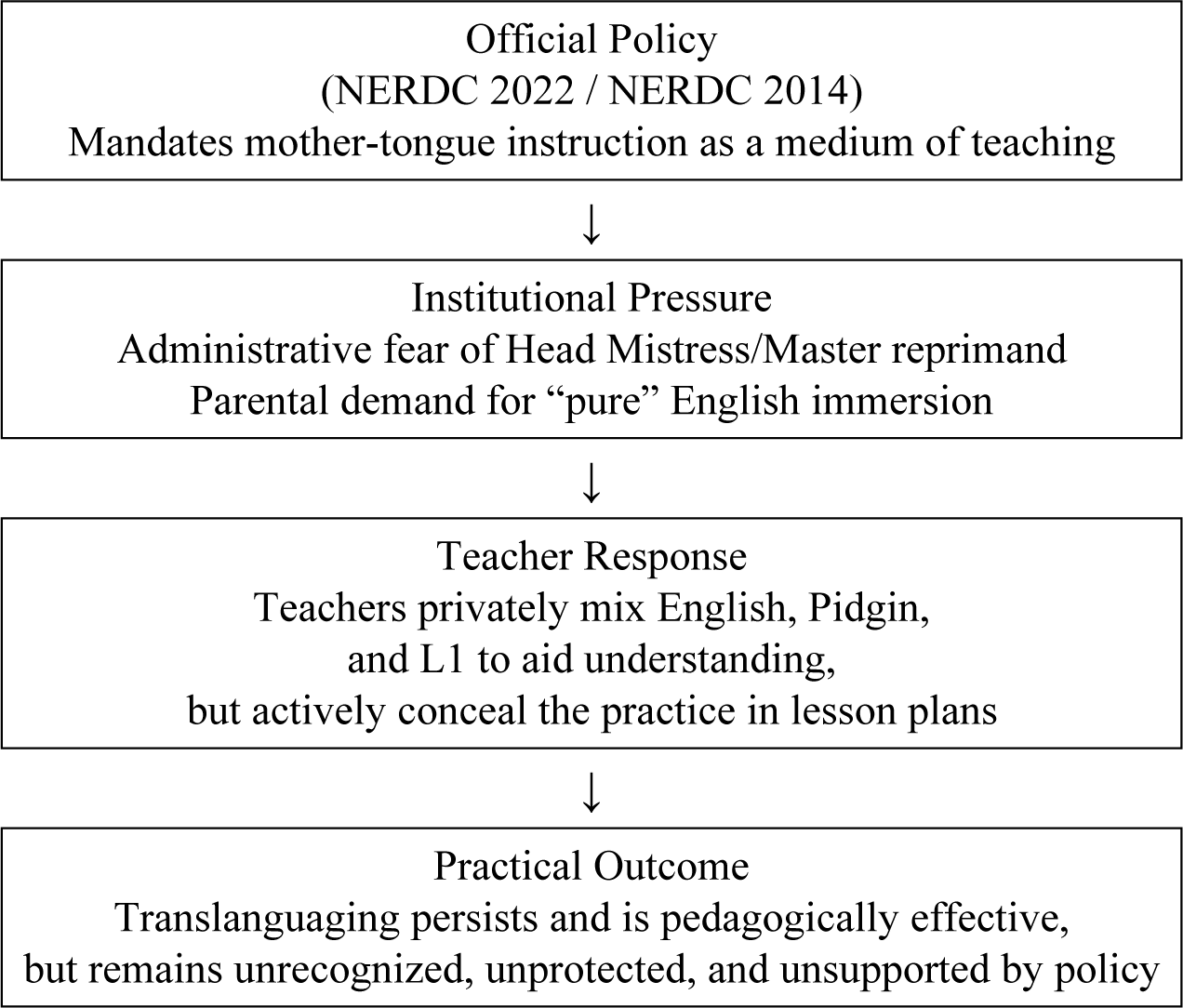
At the apex of this model, official mandates, most especially, the NERDC (2014) and the NERDC (2022), prescribe mother-tongue instruction to build foundational literacy. However, when filtered through the reality of linguistically heterogeneous urban classrooms, these top-down mandates generate severe Institutional Pressure. Teachers report experiencing a dual burden viz administrative anxiety stemming from potential sanctions by school heads, alongside socio-economic pressure from parents who demand exclusive English-medium instruction.
In response to this tension, the model illustrates the Teacher Response stage, where teachers adopt a pragmatic compromise. In order to ensure that students grasp complex scientific and mathematical concepts, teachers privately employ seamless language mixing by using Nigerian Pidgin, English, and other indigenous languages while deliberately concealing these practices in formal documentation like lesson plans. The Practical Outcome at the base of the framework demonstrates that while translanguaging persists as a pedagogically effective instructional bridge, it remains policy-unrecognized, legally unprotected, and unsupported by official curriculum materials.
Furthermore, in order to provide a holistic view of classroom communication, the quantitative performance metrics and exploratory survey trends were triangulated with qualitative themes extracted from teacher interviews and direct classroom observations. Table 3 synthesizes these findings across three primary domains viz instructional delivery, institutional constraints, and pupil comprehension.
In the Instructional Delivery domain, classroom observations confirmed that teachers frequently switch from English to Nigerian Pidgin during oral explanations, reserving formal written English exclusively for chalkboard notes and lesson plans. This visual practice directly mirrors the quantitative findings in Table 2, where teachers in both public (M = 3.57) and private (M = 3.81) schools affirmed that language mixing aids conceptual learning (p = .529). In the Institutional Constraints domain, qualitative interview data revealed widespread fear among teachers regarding potential administrative sanctions from head teachers or complaints from parents who equate educational quality with strictly English-medium instruction. This narrative evidence explains the policy–practice gap that makes teachers recognize the value of translanguaging but conceal it to avoid professional reprimand. Finally, in the Pupil Comprehension domain, observational transcripts showed that pupils participate more actively and ask clarifying questions when permitted to speak Pidgin. This qualitative insight aligns with the ANOVA results in Table 1, confirming that using Pidgin does not penalize pupils’ formal English reading (p = .775) or writing (p = .641) abilities.
Students from Edo, Esan, Igbo, Yoruba, and other home-language backgrounds did not differ significantly on reading, written mechanics, or cloze tasks (p > .05 on all three). This suggests that written literacy problems are not simply about which home language a student speaks. This result then argues against a simple deficit pattern within this multilingual sample. The t-test (p = .529) also suggests that teachers across both sectors share the view that mixing languages helps clarify difficult material. However, this rests on one scale item (BELIEF_1), from a four-item instrument that never reached solid reliability even after revision (α = .518, against a usual benchmark of .70). These results point to the fact that the breach in the implementation of the National Language Policy is not cognitive but structural and psychological.
The quantitative data already show teachers support language mixing in principle. So the more urgent need may be for education authorities to provide standard bilingual lesson plans and vocabulary lists with clear, formal materials that protect teachers’ translanguaging in the classroom. This would support the practice that teachers already believe in. It is more expedient to strengthen such firmly held beliefs than to try to change them.
4. Recommendations
It is then expedient to translate the empirical findings into actionable educational reforms. This involves developing an implementation framework to bridge the policy–practice gap in multilingual urban settings. Table 4 maps specific target action areas against concrete pedagogical strategies and corresponding national policy alignment goals.
The framework focuses on three key action areas. First, in Curriculum Adaptation, the framework proposes developing bilingual and translanguaging supplementary learning materials that explicitly pair standard English with Nigerian Pidgin for core subjects like Mathematics, Computer Science, Agricultural Science, and Basic Science. This initiative aligns directly with updating NERDC guidelines to reflect the realities of linguistically diverse urban centers. Second, in Teacher Support, the framework targets systematic capacity building through professional development workshops organized by SUBEB. By providing structured training on guided translanguaging, teachers will be equipped with validated pedagogical techniques while relieving administrative anxiety and fear of sanctions. Third, in Assessment Revision, the framework recommends incorporating oral-auditory diagnostic tasks into classroom evaluations to measure conceptual understanding independently of written English mechanics. This reform supports Sustainable Development Goal 4 (Targets 4.5 and 4.7) by fostering equitable, inclusive assessment environments for urban learners across diverse language backgrounds (UNESCO 2015).
We acknowledge a number of limitations in this study. The first concerns the Scale Reliability. Although the four-item teacher survey scale achieved an internal consistency of α = .518, this sits below the standard .700 threshold required for confirmatory psychological measurement. Nevertheless, the result is acceptable for exploratory field research. The caveat is that our quantitative findings with regard to teacher attitudes should be interpreted as preliminary.
The second limitation is the 60% response to our survey. Only 30 out of 50 sampled teachers completed the survey. Consequently, non-random missingness cannot be entirely ruled out, and because of this the sector-based attitude comparisons should be interpreted as descriptive insights rather than a generalization across all urban teachers.
Third, on the inferential scope and post-hoc testing: the omnibus ANOVA for the Pidgin Oral-Auditory Summarisation task fell slightly short of conventional significance (F = 2.255, p = .065). The reported pairwise Tukey comparison (p = .050) should be interpreted as an exploratory indicator for future research rather than a confirmatory statistical conclusion.
Again, we acknowledge the constraints in our sample by selecting only one grade (Primary 6). The basis of this selection was to control for curricular exposure. However, this limits the generalisation of our findings to lower primary levels.
In addition, the absence of a direct monolingual comparison group makes our data argue against only a home-language deficit pattern within a multilingual setting. Therefore, our result should be cautiously read as preliminary rather than proving the overall superiority of translanguaging over monolingual instruction.
5. Conclusion
The recommendation to adapt primary school curricula is grounded in pedagogical strategies that are already actively shaping daily classroom instruction across Benin City. Rather than introducing an unfamiliar methodology, this study argues for official educational bodies to formally approve and regulate existing translanguaging practices, allowing them to operate alongside official national guidelines. Synthesizing the empirical evidence highlights the essential imperatives for educational reform.
In highly diverse urban centers like Benin City, rigid mandates prescribing single mother-tongue instruction inadvertently create structural learning barriers. The spontaneous, structured deployment of Nigerian Pidgin alongside English provides a pragmatic, realistic pathway toward achieving core national literacy goals (NERDC 2022) within multi-ethnic primary classrooms.
The formalisation of translanguaging provides a framework to relieve parental anxieties regarding instructional rigor. Our findings demonstrate that dynamic language mixing coexists with equivalent performance in standard English reading and writing across diverse home-language cohorts (p > .05). While cross-sectional data cannot establish direct causality, the results confirm that flexible language practices impose no literacy penalty on learners.
In order to mitigate administrative fear, translanguaging should be formally institutionalized through SUBEB and NERDC-approved lesson plans and multilingual glossary guides. Legal protection and official resources will allow teachers to deploy Pidgin freely to unpack complex concepts without fearing professional sanctions or perceived drops in academic standards. Gobbo (2013) demonstrates how collaborative teacher-pupil language frameworks can be institutionalized effectively, providing a valuable precedent for urban primary schools.
Ultimately, the empirical evidence from Benin City underscores that educational inequality in multilingual societies is generated not merely by language differences, but by the systemic gap between top-down policy mandates and classroom realities. Legitimizing real-world classroom practices offers a vital pathway toward bridging this policy–practice divide and fostering equitable education across the Global South.

